


Kajiado County is bracing for an unpredictable March–May long rains season, with meteorologists warning of prolonged dry spells punctuated by isolated, intense storms.
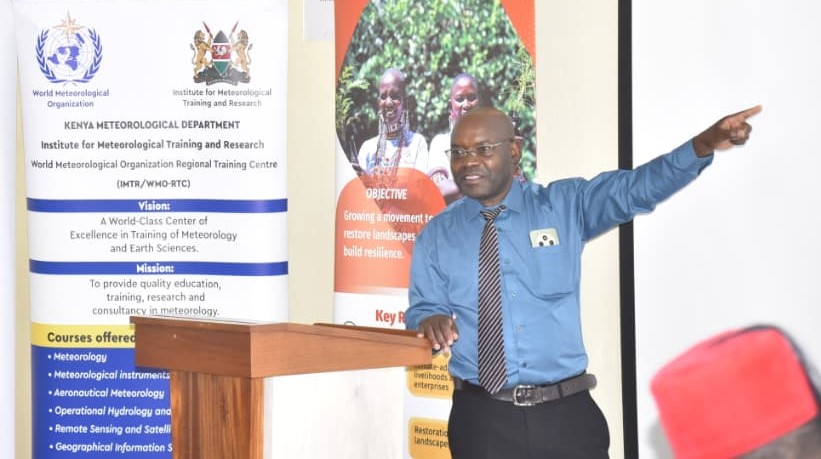
County Director of Meteorological Services, Benson Lubanga, said the season will be shaped by tropical cyclones and the Madden-Julian Oscillation, weather systems expected to cause uneven rainfall distribution.
“These systems are likely to cause near-average to above-average rainfall in some areas and near-average to below-average rainfall in others. However, their effects will be short-lived and will be closely monitored,” he explained.
Forecasts indicate that northern and upper western sub-counties may receive near-average to above-average rainfall, while eastern, central-south, and lower western regions could experience near-average to below-average precipitation.
ALSO READ:
Kajiado commissions solar-powered cold rooms at Kitengela Market
Residents have been urged to harvest and store rainwater whenever it rains, as prolonged dry spells are expected between rainfall episodes.
The season is expected to end in late May. Meteorologists also cautioned that temperatures will remain higher than average throughout the season.
The forecast was unveiled during a two-day participatory climate scenario planning workshop organized by the county government in collaboration with the Kenya Climate Change Working Group, the Kenya Meteorological Department, and Heifer International.
Climate experts, however, stressed the need for long-term solutions. John Kioli of the Kenya Climate Change Working Group urged the government to prioritize drought mitigation measures.
“The cycle of drought and food insecurity keeps repeating. Sustainable solutions are urgently needed,” he said.
The warning comes against the backdrop of poor performance of the 2025 short rains, which were marked by late onset, below-normal rainfall, and poor spatial distribution. This led to widespread crop failure, inadequate recharge of water sources, and poor regeneration of pasture.
By December 2025, the National Drought Management Authority had placed Kajiado under the alert drought phase, identifying Kajiado West and Kajiado Central as hotspots. Approximately 63,400 people were projected to require urgent food assistance.
In response, the national government rolled out food support programmes, including in-kind relief and cash transfers, across all arid and semi-arid counties.
By Masaki Enock