

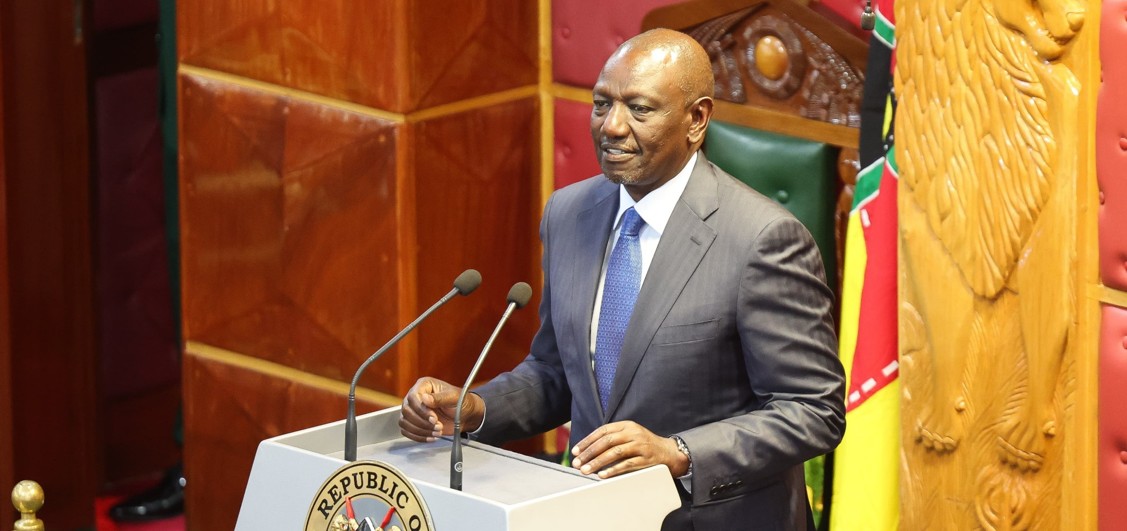
Kajiado County is poised for a transformative infrastructure boost following President William Ruto’s announcement of key road dualling projects during his State of the Nation Address at the National Assembly this afternoon.
Among the roads earmarked for expansion in Kajiado are the Bomas–Ongata Rongai–Kiserian Road, the Bomas–Karen–Ngong Road, the Athi River–Kitengela–Kajiado–Namanga Road, and the Ngong–Isinya Road. These corridors are vital to the county’s economic development, serving as lifelines for trade, transport, and inter-county connectivity.
Governor Joseph Ole Lenku welcomed the announcement, describing Kajiado as a strategic beneficiary of what he termed President Ruto’s “Infrastructural Marshal Plan.” He noted that the selected roads will not only ease mobility but also unlock new opportunities for investment, commerce, and regional integration.
“These roads are very critical in the overall economic development of Kajiado and its fellow metropolitan neighbours,” Lenku said, thanking the President for the consideration.
ALSO READ:
Kajiado County Ranked Among Least Business-Friendly Counties in New 2025 CBSI Report
Other roads which are set to be dualled include the Rironi–Naivasha–Nakuru–Mau Summit Road and the Machakos Junction–Mariakani Road, both of which are part of the national highway network connecting key urban and economic zones.
The plan also covers the Mau Summit–Kericho–Kisumu corridor and the Mombasa–Lunga Lunga Road, among others.
President Ruto’s infrastructure blueprint signals a renewed commitment to modernizing Kenya’s transport systems, reducing travel time, and enhancing inter-county trade.
The president also emphasised that the road expansion programme will not only reduce congestion and improve travel times but also stimulate trade, create jobs, and facilitate access to markets for farmers and businesses
For Kajiado, the dualling of these roads is expected to catalyze growth in real estate, tourism, and cross-border commerce, especially with Tanzania and other neighbouring counties.
By Masaki Enock