

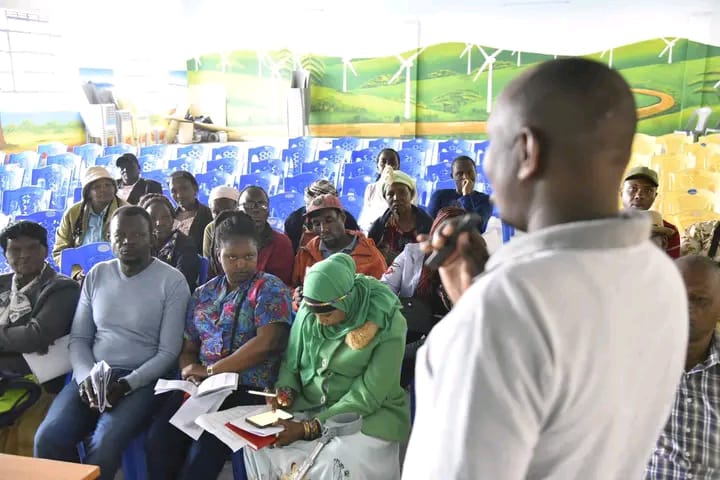
Kajiado County residents have raised fresh concerns over major revenue losses as the County Assembly continues to review the Kajiado County Finance Bill 2025. The forums in Kajiado North and West revealed long-standing issues in revenue collection pointing to corruption loopholes poor systems and informal payments that continue to drain the county’s finances.
Kajiado County has the capacity to raise Ksh 6.7 billion yearly according to the Commission on Revenue Allocation (CRA. Even so the county collects less than Ksh1 billion each year. This gap has raised concern over how revenue is handled.
On November 22, the County Assembly Sectoral Committee on Finance Economic Planning and ICT concluded public participation on the Kajiado County Finance Bill 2025. The forums covered all 25 wards. Residents used the sessions to highlight long-standing revenue problems.
In Kajiado North and West residents first pointed to poor infrastructure. Some said they had repaired or constructed their own access roads. They linked these issues to weak project oversight.
ALSO READ:
Number of Pregnant Candidates Sitting KCSE Exams Decline in Kajiado
Business owners also complained of double and triple taxation. This they said discourages compliance and weakens growth. Many argued that the system is becoming harder to operate in.
Another major concern was informal cash payments. Residents said some collectors demand cash or use personal M-Pesa numbers. As a result money meant for the County Revenue Fund never reaches it.
They asked the Committee chaired by Jackson Angaine to investigate revenue from slaughterhouses construction sites and taxes on murram and ballast. Residents claimed these funds end up in private pockets. They said this has continued for years without action.
Transporters of construction materials added they are harassed when they choose to pay officially. They said officers block them to force cash payments. This they believe fuels corruption further.
Representatives from slaughterhouses estimated that abattoirs could generate about Ksh20 million annually. However they said separate informal groups collect the money in cash. None of it is deposited into the official county account.
Residents also raised concerns about fake permits and receipts. They accused some county officers of colluding with traders to underpay fees. Cash payments allow these transactions to go unrecorded.
YOU MAY HAVE MISSED:
Kajiado County Ranked Among Least Business-Friendly Counties in New 2025 CBSI Report
For example sand transport stickers officially cost Ksh50,000 per month. Residents said the same sticker is sold for Ksh30,000 in cash. Ballast and murram transporters also reported paying Ksh1,000 to Ksh1,200 per trip instead of the official Ksh2,000.
Experts estimate the construction sector alone could generate nearly Ksh2 billion annually. Residents said this shows how much the county is losing. They warned that leakages will continue unless controls are strengthened.
To solve these problems residents proposed several reforms. They called for CCTV cameras at all collection points. They also asked for clear display of County Revenue Fund account details.
They further recommended a fully digital cashless revenue system. They urged oversight agencies to monitor corrupt officers. Finally they asked for a review of levies to make them fair and affordable.
By Benedict Aoya