


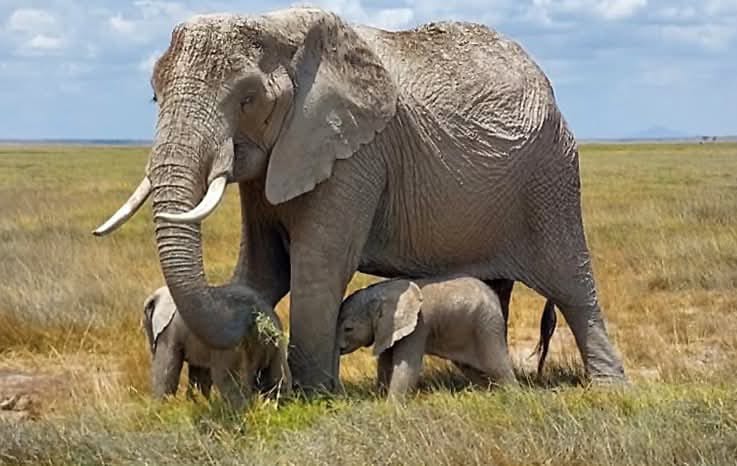
Amboseli National Park has witnessed a rare and extraordinary event: the birth of twin elephant calves, a phenomenon that occurs in only about one per cent of elephant pregnancies. The Kenya Wildlife Service (KWS) hailed the sighting as a “miraculous moment” and a powerful testament to the success of ongoing conservation efforts that continue to safeguard the country’s elephant populations.
The newborn twins were recently spotted trailing their mother across Amboseli’s sweeping grasslands, drawing excitement from rangers and visitors alike. In a celebratory statement, KWS remarked: “Twin elephant calves were recently sighted in Amboseli, the iconic home of the African elephant, a rare glimpse of nature’s quiet miracles.”
While the birth has sparked joy, experts caution that survival for both calves is not guaranteed. Elephant mothers must provide sufficient milk and protection for two infants simultaneously, a challenge in the wild.
African elephants, the largest land mammals, carry their young for about 22 months, and twin births, especially of different genders are considered exceptionally rare.
ALSO READ:
Ngong OCS Warns of Rising Mobile Fraud and Juvenile Crime Ahead of Festive Season
Giacomo D’Ammando, Samburu Research Manager at the conservation group Save the Elephants, explained that mothers only carry twins to term under specific conditions that remain under study. “Twin births are uncommon, and their survival depends on a delicate balance of maternal health, environmental factors, and protection from predators,” he noted.
Kenya has recorded a handful of twin births in recent years. In January 2022, a mother elephant named Bora in Samburu National Reserve gave birth to a male and female pair of twins. Despite surviving a prolonged drought for three months, the female calf later disappeared, likely due to predation or natural causes, while the male’s fate remains uncertain.
Most recently, in January 2025, KWS reported another rare twin birth in Shimba Hills National Reserve, Kwale County, underscoring the exceptional nature of such events across Kenya’s protected areas.
For conservationists, the birth in Amboseli is more than a marvel of nature but a reminder of the importance of protecting habitats and ensuring the survival of endangered species, the arrival of twin calves offers renewed hope and inspiration for wildlife conservation in Kenya.
By Masaki Enock